When Gratitude Is Hard to Find
From the Coffee Table Book — real, handwritten gratitude from people all over the country.
Not every entry in the Coffee Table Book is sunshine. That’s exactly what makes it matter. People wrote down what was true, not what looked good, and some of the truest ones are the hardest. Here’s one worth sitting with, word for word:
“Honestly, it’s hard for me to say what I’m grateful for because I feel like I take most things for granted.”
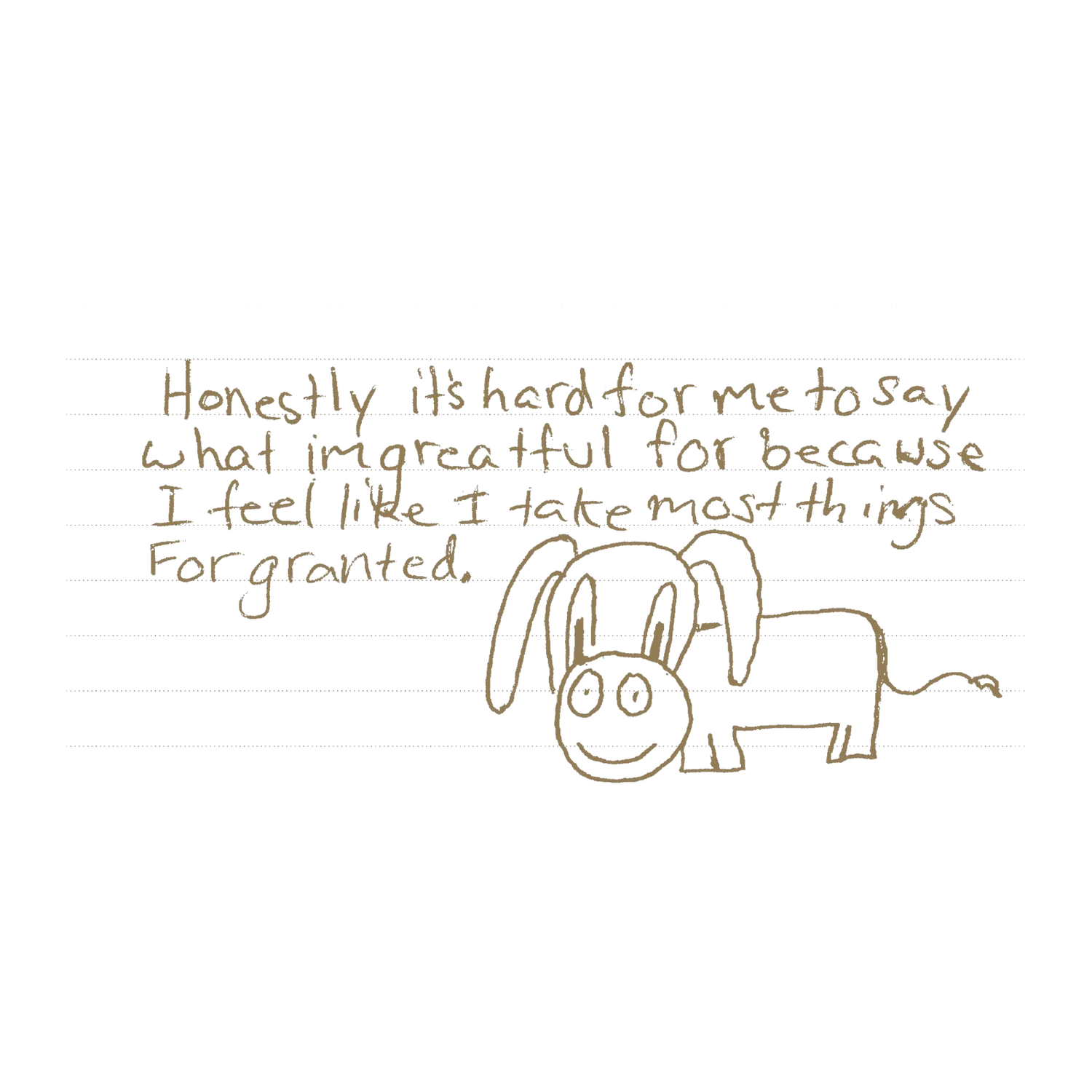
Whoever wrote that should know it might be the most grateful thing in the whole book. Because it’s honest. They sat down in front of a blank page, felt nothing rise up, and instead of faking it, they told the truth. That’s not a failure of gratitude. That’s the beginning of it.
Gratitude gets treated as a performance sometimes — a highlight reel of things people are supposed to feel lucky about. But real gratitude isn’t a mood summoned on command. It’s a practice, like anything else worth getting good at. Grateful Peoples founder Teddy Droseros has long described it as an art form: the more you practice, the better you get. Nobody picks up a guitar and plays beautifully on day one. Nobody opens a journal and feels overflowing thanks on day one either.
The reassuring part is that the science agrees this is a skill, not a personality trait a person is born with or without. A lot of research collected at the Greater Good Science Center shows that people who keep a simple, regular gratitude practice actually notice more to be grateful for over time. The noticing gets easier. The list gets longer. You’re not behind — just early.
So if you also feel like you take most things for granted, start embarrassingly small. Three things tonight, and they can be boring — a warm bed, the coffee, the fact that nothing hurts right now. Do it again tomorrow. The goal isn’t to feel a certain way — just to train your eyes to find what was already there.